Category: HEALTHY-NUTRITION

  • Helen Mirren’s Asymmetrical Bixie Cut Is Ready for Summer—See the Photos

    Helen Mirren’s Asymmetrical Bixie Cut Is Ready for Summer—See the Photos

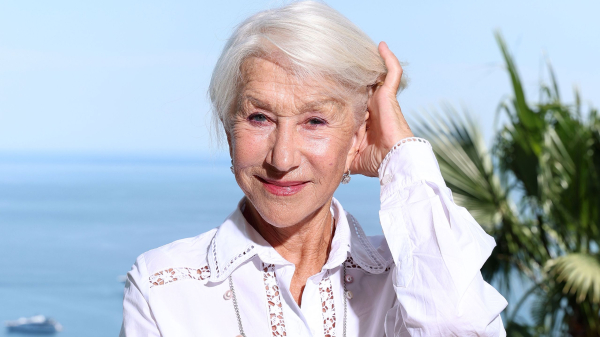
    Helen Mirren poses in a white top and pink skirt at an event in Italy. She has a new short hair cut.Getty ImagesSave StorySave this storySave StorySave this story

    Dame Helen Mirren was ready for a summer refresh—and honestly, after seeing these photos of her breezy new bixie cut, I am too.

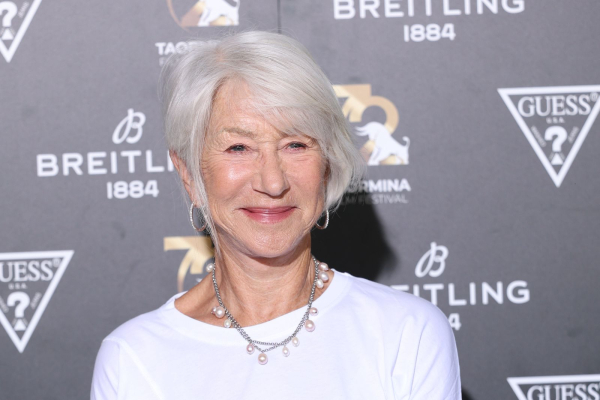
    Mirren, who has never shied away from changing up her hairstyle and has even shared that she cuts her own hair with kitchen scissors on occasion, debuted a very cute, very summery new crop at the Taormina Film Festival in Italy. Previously, she'd been wearing her hair in a more traditional bob with bangs, but now it's a whole lot shorter and seems like just the thing for those sticky, sweaty summer days. Now, her silver-white hair is cropped right at the nape of her neck but left longer on one side, just grazing her cheekbone. She wore it parted to that side to emphasize the shape, with a soft, lightweight finish that looked perfect for the sunny Italian setting.

    Helen Mirren wears a white top pearl necklace and has her hair styled in an asymmetrical bixie.Getty Images

    Bixies and pixies of all shapes, sizes, and styles have been having quite a moment the past few years, especially come summertime. They're infinitely customizable to your hair type and texture, not to mention your personal style, whether it's edgy, glamorous, or quirky. And short hair always feels so good once the temperatures climb and the humidity sets in; keeping your neck free allows the cool breeze of a blasting air conditioner to caress your skin.

    Mirren has a lot of fun experimenting with different looks, and we truly never know what she's going to do next. Remember her XXL hair extensions from a few years ago, or her enduringly beloved pastel pink hair color? Shorter lengths are definitely her sweet spot, cut-wise, but she's always game to evolve the cut. Her free-spirited, adventurous attitude toward all things beauty is inspiring, and so is her attitude about age. Last fall, she told Allure that “everything” about being 80 was fabulous. “F*ck it, I'm alive and I'm working and I can drink a glass of wine and I can wear makeup and I can listen to music and I can watch a beautiful sunset and I can go to the theater and I can watch a movie and I can binge Netflix and I can live life. It's a beautiful thing.” Truer words have never been spoken.

    More celebrity beauty news:

    • Even Cindy Crawford Is Tempted to Get a Facelift
    • Chappell Roan Is the New Face of MAC Viva Glam
    • Rihanna Proves a Squared-Off Shape Looks Just as Chic on Short Nails
  • Rihanna Proves a Squared-Off Shape Looks Just as Chic on Short Nails — See Photos

    Rihanna Proves a Squared-Off Shape Looks Just as Chic on Short Nails — See Photos

    Rihanna posing with long straight hair and a chartreuse topPhoto: Getty ImagesSave StorySave this storySave StorySave this story

    Square nails are often associated with longer lengths because a lot of folks are under the impression that the more blunt shape can make short nails look wider and stubbier, favoring rounded, oval, or squoval shapes for a less-long manicure. But Rihanna isn't a lot of folks—she's currently ignoring conventional wisdom and making short, square nails look like they may be shaping up to be the next big manicure trend.

    The singer and entrepreneur was spotted out in New York City on Tuesday night wearing a camel-colored leather jacket over a fuzzy, ribbed dress in the same hue, her voluminous curls cascading around her shoulders. But blink and you'll miss a detail that we immediately clocked: short nails with a straight edge.

    The crisp outline gives the manicure a deliberate, graphic quality, even in the super subtle shade they're painted: a pale, milky off-white. It’s also very much in line with Rihanna's apparent polish preferences as of late: more light, creamy nail colors over bold, chrome finishes or deep vampy shades. She likes it so much, in fact, that she's even wearing a matching pedicure.

    Rihanna walking in NYC wearing a camel leather coat and fuzzy dressPhoto: Getty ImagesRihanna walking in NYC wearing a camel leather coat and fuzzy dressPhoto: Getty Images

    While simple, the look stands out because it reframes short nails as intentional rather than just low-maintenance. The square shape adds structure and attitude, while the milky polish keeps things understated and on-trend. It’s a reminder that nails don’t always need more length, embellishment, or intense color to look cool; sometimes it's just a matter of changing the silhouette to something a little unexpected, taking a shape people think shouldn’t work and wearing it anyway.

  • Everything From Sensitive Skin-Friendly Brand First Aid Beauty Is Worth Hoarding—Review

    Everything From Sensitive Skin-Friendly Brand First Aid Beauty Is Worth Hoarding—Review

    Image may contain Bottle Lotion Cosmetics Can Tin and PerfumeBuy Now at First Aid BeautySave StorySave this storySave StorySave this story

    TL;DR:

    • What it is: A sensitive skin-friendly body-care collection
    • What it does: Gently exfoliates, hydrates, and nourishes without irritation
    • Who it’s for: Anyone, especially those with easily irritated skin, looking for hardworking, no-frills skin- and body-care products that leave skin soft and glowy

    Sometimes it’s the simple things that make the most impact. That’s certainly the case with First Aid Beauty’s skin- and body-care products, which are fit (and formulated) for sensitive types.

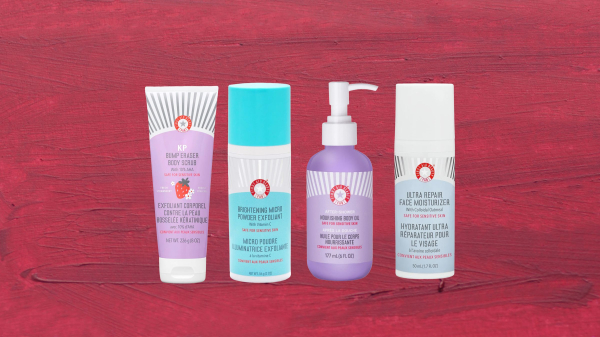
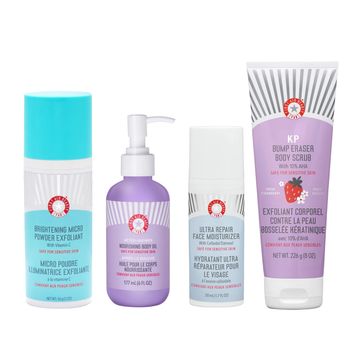
    The entire collection is great, but some of my favorites are the super-silky After-Shower Nourishing Body Oil, the glow-inducing, powder-to-foam Brightening Micro Powder Exfoliant; the head-to-toe KP Bump Eraser Body Scrub 10% AHA Fresh Strawberry that smells more farmstand than pharmacy; and the coddling Ultra Repair Face Moisturizer. But like I said, you can’t go wrong with any of them.

    Lucky for me, I’ve had all four of them in my shower (or on my bathroom counter) for a few months now (jealous?), and can confirm that I’ve sloughed, sudsed, and slathered with them all—and not a single one irritated my finicky skin.

    You chose between the First Aid Beauty After-Shower Nourishing Body Oil, Brightening Micro Powder Exfoliant, KP Bump Eraser Body Scrub 10% AHA Fresh Strawberry, or Ultra Repair Face Moisturizer in the June Allure Beauty Box.

    GET THE BOXFirst Aid Beauty After-Shower Nourishing Body Oil, Brightening Micro Powder Exfoliant, KP Bump Eraser Body Scrub 10% AHA Fresh Strawberry, or Ultra Repair Face Moisturizer

    First Aid Beauty After-Shower Nourishing Body Oil, Brightening Micro Powder Exfoliant, KP Bump Eraser Body Scrub 10% AHA Fresh Strawberry, or Ultra Repair Face Moisturizer

    Buy at First Aid BeautyBuy at First Aid Beauty

  • 29 Celebrity Beauty Brands That Are Here to Stay

    29 Celebrity Beauty Brands That Are Here to Stay

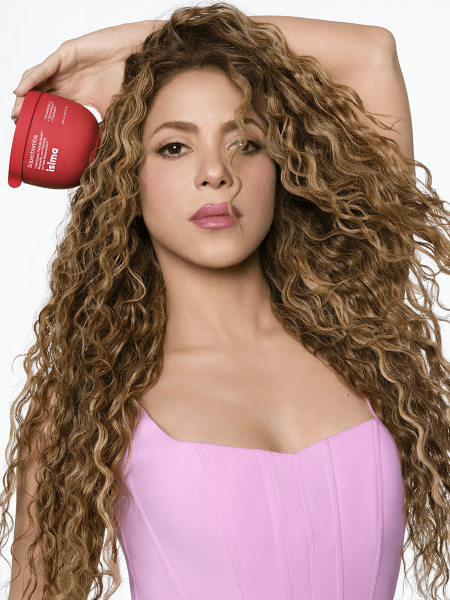
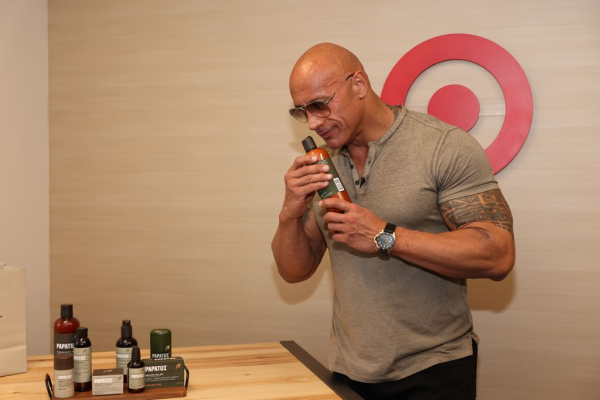
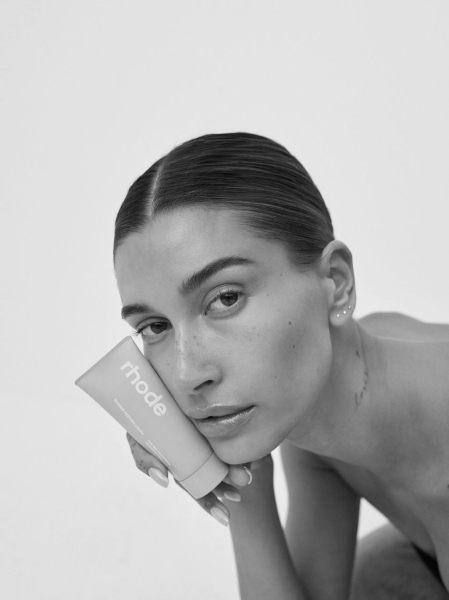
    Rihanna Dwayne Johnson and Selena GomezGettySave StorySave this storySave StorySave this story

    Celebrities have been associated with beauty for as long as their images could be printed. The original influencers—actors and musicians—have lent their faces (and hair and bodies) to countless ad campaigns for beauty brands. And they still do, often as extremely well-compensated "brand ambassadors." But it seems, nowadays, leasing out their likeness simply isn't enough for some of the more aesthetically eager and ambitious stars. We are still living in the age of the celebrity beauty brand.

    Sure, we've watched as countless celebrities have launched a fragrance or two or 25, but the 21st century—in particular the last few years—has seen an unprecedented rise in makeup, skin-care, and hair-care companies founded by famous folks who couldn't resist the lure of beauty entrepreneurship. Some have already come and gone (remember Jessica Simpson's Dessert Beauty?), while others have stayed the course for many years now (your beauty lineup may very well include something from Jessica Alba's Honest Beauty).

    And despite the fickle nature of the genre and the fatigue that can sometimes outweigh fan enthusiasm, celebrity beauty brands show no sign of slowing. Even stars who are notoriously private and picky about their endeavors (cough, cough Beyoncé) have entered the beauty space with highly anticipated launches—and products that prove to actually deliver lasting benefits.

    Here, you'll find the celebrities who currently have thriving beauty brands. Each one's star products are proof that a famous name on the label alone isn't a solid reason to try them. But the serious research, science, and thoughtfulness that went into them sure is.

    Marci Robin is a contributing editor at Allure. She previously served as senior digital beauty editor at Good Housekeeping, executive editor of xoVain, and senior online editor at NewBeauty; her writing has also appeared in publications such as InStyle, Martha Stewart, Glamour, and Refinery29. She graduated from Florida State University … Read MoreContributing Editor

    Annie Blay-Tettey is the associate beauty editor at Allure. She previously served as the associate beauty news editor at The Zoe Report and has held roles at Elle.com, Popsugar, Coveteur, Moda Operandi, Ebony, and Bustle. She graduated from the S.I. Newhouse School of Public Communications at Syracuse University with a … Read MoreAssociate Beauty Editor

    KeywordsshoppingmakeupskinHaircelebrityFragranceRead More7 Best Neck Creams to Improve Lines, Laxity, and TextureShopping7 Best Neck Creams to Improve Lines, Laxity, and TextureThese neck creams go beyond basic moisture to target visible signs of aging.The Best False Lashes for Sky-High ResultsMakeupThe Best False Lashes for Sky-High ResultsUp, up, and away.10 Best Face Moisturizers for Every Skin Type and ConcernShopping10 Best Face Moisturizers for Every Skin Type and ConcernFrom lightweight lotions to rich creams, these formulas keep skin balanced, comfortable, and glowing.The Best Brown Mascaras to Fluff Up Your LashesMakeupThe Best Brown Mascaras to Fluff Up Your LashesSubtlety never looked so good.9 Best Chemical Peels to Use at Home for Softer, Glowier SkinShopping9 Best Chemical Peels to Use at Home for Softer, Glowier SkinThere's nothing better for sloughing off dead skin and refining skin texture.9 Best Mineral Sunscreens for Coverage Without the White CastShopping9 Best Mineral Sunscreens for Coverage Without the White CastNo irritation, no ashiness—just gentle, effective SPF.9 Best Sunscreen Sticks for Sun Protection on the GoShopping9 Best Sunscreen Sticks for Sun Protection on the GoThere’s nothing better for mess-free application, especially if you have kids.8 Best Body Scrubs for Baby-Soft Skin All Year RoundDry Skin8 Best Body Scrubs for Baby-Soft Skin All Year RoundTackle ingrown hairs, KP, dry patches, and everything in between.Mandy Moore Breaks Down Her Iconic Looks From Princess Diaries, A Walk to Remember & MoreCelebrityMandy Moore Breaks Down Her Iconic Looks From Princess Diaries, A Walk to Remember & MoreMandy Moore revisits some of her most memorable beauty and fashion moments in this episode of Iconic Looks. From beloved film roles and red carpet appearances to unforgettable music video eras, Mandy breaks down the stories, inspirations, and transformations behind her most recognizable looks. Watch as Mandy reflects on the evolution of her style and career — and the beauty moments that defined each chapter along the way. Mandy Moore stars in Sony Picture’s THE BREADWINNER, exclusively in Movie Theaters May 29, 2026Olivia Dean's 10-Minute Routine for Healthy Hair & Dewy SkinCelebrityOlivia Dean’s 10-Minute Routine for Healthy Hair & Dewy Skin“The Art of Loving” singer Olivia Dean shares her go-to everyday makeup routine — even when she only has 10 minutes to get ready. From moisturizing her hair to perfecting her soft glam look with bronzer and blush, Olivia walks through the beauty staples and techniques behind her effortless routine.'Off Campus' Star Ella Bright's 10-Minute Routine for a Fresh Daytime LookCelebrity‘Off Campus’ Star Ella Bright’s 10-Minute Routine for a Fresh Daytime LookElla Bright shares her go-to beauty routine and shows how she gets ready in just 10 minutes. From skincare essentials to her everyday makeup must-haves, Ella walks through the products and techniques she relies on for a fresh, effortless look.Inside Shay Mitchell's Lymphatic Drainage Massage AppointmentCelebrityInside Shay Mitchell’s Lymphatic Drainage Massage AppointmentShay Mitchell invites you inside one of her favorite self-care rituals: her regular lymphatic drainage massage appointment. Shay shares why this treatment has become a staple in her wellness routine and what she loves most about making time for it. From the benefits she looks for to the role self-care plays in her busy schedule, Shay Mitchell offers a candid look at the appointment she keeps coming back to. Join her behind the scenes for an intimate glimpse into her wellness routine and the practices that help her feel her best.

  • In Defense of Sunlight: A New Book Adds More Heat to the Sun Exposure Debate

    In Defense of Sunlight: A New Book Adds More Heat to the Sun Exposure Debate

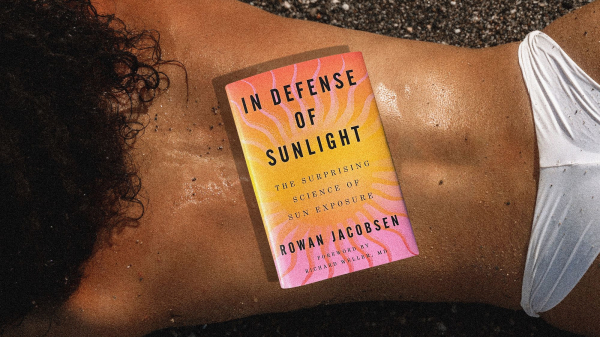
    rowan jacobsen's book in defense of sunlight on the back of a woman laying out in the sunPhoto: Adobe Stock; Kara McGrathSave StorySave this storySave StorySave this story

    “Get sun. Not too much. Go outside.” The Pollanian thesis of Rowan Jacobsen’s new book, In Defense of Sunlight, sounds reasonable enough. Parents everywhere have been peeling their children—and frankly themselves—away from screens and sending them out into the sun since those screens have been invented. “Touching grass” has become an aspirational activity.

    “I wrote the book because I thought we were getting to a point where our avoidance of the sun had gone too far,” Jacobsen told me recently, while we sat on a bench in Cobble Hill Park in Brooklyn, a Callery pear tree providing shade on one of the first warm, sunny days this spring. (I was testing the new SPF 30 from Peach & Lily; Jacobsen was sunscreen-free.) “People were being told to apply sunscreen every two hours in the middle of winter when they were working indoors.”

    I first learned of Jacobsen’s work in 2024, when he wrote an article for The Atlantic called “Against Sunscreen Absolutism.” The story was in praise of Australia’s then-recently-revised sun safety guidelines, which split the population into three groups and offered different SPF guidelines for each: People with pale skin and/or additional risk factors for skin cancer should keep wearing sunscreen every day, those with “olive or pale-brown skin” should only use it if the UV Index was above 3, and those with the deepest skin tones only need sunscreen for long beach days and other excursions that would lead to spending hours in the bright sunlight. “Yes, UV rays cause skin cancer, but for some, too much shade can be just as harmful as too much sun,” Jacobsen wrote at the time.

    This story went viral in the very specific group chats I’m privy to as a beauty editor. Dermatologists felt this guy was trying to undo all the hard work they’d put into convincing people to wear sunscreen as a preventative health measure. The American Academy of Dermatologists (AAD) even released a formal statement saying Jacobsen’s article “contains misleading information that may discourage the public from using sun protection, thereby increasing their risk of skin cancer.” I also issued a formal response in this very publication, acknowledging that sunscreen evangelists can be a bit dramatic (no, I don’t actually think I need to apply SPF every two hours in the middle of January when I have no plans to leave my house), but also that being extreme can seem necessary to dermatologists who struggle to get their patients to use sunscreen at all.

    Two years later, the general public only seems less convinced that sunscreen is a useful health care tool and more certain that they should be availing themselves of regular UV exposure. Tanning is on the rise, especially among Gens Z and Alpha although our current Boomer health secretary is also a fan. People on TikTok are sharing their “get ready to lay out with me” routines, and many more are tracking the UV Index to make sure they’re outside at peak hours for skin-darkening sun damage. Invasive melanoma rates have generally increased since the 1970s, and a recent study by the American Academy of Dermatology found that more than 20% of Gen Z respondents prioritized getting a tan over protecting their skin. Folks of a certain mindset are claiming that, actually, the sun is good and it’s sunscreen and sunglasses that are making you sick. The Centers for Disease Control and Prevention (CDC) has reported that only 12% of men and 30% of women always use sunscreen if they’re going to be outside for more than an hour on a sunny day. In sun-adjacent news, the FDA recently blocked a bill that would have banned the use of tanning beds for anyone under 18. It would seem that there are plenty of folks—some of them with much public-health power—embracing UV rays in full force.

    So do we really need to be defending the sun in 2026? Jacobsen is quick to clarify that he’s not in the anti-sunscreen, get-ready-to-lay-out-with-him camp, but also argues there’s no need to panic about our culture’s current wave of UV enthusiasm. His book is a tight 199 pages (268 if you count the glossary, resources, notes, and index at the end) and cites nearly as many studies—many published in peer-reviewed journals like the Journal of the American Medical Association, The Lancet, and even the Journal of the American Academy of Dermatology—that point toward prolonged sun avoidance being quite dangerous.

    “Sun deprivation was linked to heart attack, stroke, diabetes, dementia, depression, Parkinson’s, myopia, respiratory infections, certain cancers, and autoimmune conditions such as multiple sclerosis and inflammatory bowel disease,” he writes in the introduction. “That evidence had been showing up in various observational studies for decades, but it had been growing stronger as the tools got better.” At one point, he cites a study published in the Journal of Internal Medicine that found nonsmokers who avoided the sun had about the same life expectancy as smokers who embraced the sun. “Avoidance of sun exposure seems to be a risk factor of magnitude similar to smoking in terms of life expectancy,” the authors concluded.

    “Sun deprivation” isn't an officially defined term; most of the studies Jacobsen cites look at self-reported time spent in (or avoiding) the sun alongside vitamin D levels and health outcomes. Jacobsen tells me his "not official nor a prescription, just one informed guy’s back-of-the-envelope rubric" is that you're probably “deprived” if you're not getting enough sun to maintain a vitamin D level of 20 ng/ml or above (without supplementation). The amount of time you'd need to spend outside to reach those levels will depend on the weather, season, your skin tone, and location. “But as a general rule, it’s never about getting lots of sunlight, it’s about making sure you get more than none,” he says.

    On the flip side, spending some time in the sun is linked with, well, less of all the risks mentioned above: less depression, lower blood pressure, a lower risk of diabetes, enhanced wound healing, less heart disease, better mental health, less fatigue, fewer autoimmune disorders…essentially, being outside seems to be quite good for you. It used to be widely accepted that this was because UV rays help your body produce vitamin D. But, Jacobsen and many scientists now argue, if it was just a vitamin D thing, then you should be able to pop a pill and stay inside forever. Instead, more recent studies have found that, while vitamin D supplements do, indeed, raise vitamin D levels, those artificially-achieved higher levels don’t necessarily correlate with better health outcomes.

    “They basically set the recommendations for the palest people, assuming everyone else could do that too and it wouldn’t cause any harm.”

    It seems that the sun provides some special sauce when it comes to human health, though the exact mechanism behind its benefits is still being studied. The nitric oxide we produce when UV rays hit our skin probably plays a role; the low levels of inflammation created by the sun may as well. To be clear, there is still zero science that recommends excessive amounts of unprotected sun exposure; 15 minutes a day seems to be plenty. Jacobsen compares it to allergies: Children who are introduced to small amounts of peanuts or exposed to microbes on farms are less likely to develop allergies and asthma as they grow up.

    Jacobsen believes the messaging about sun protection has been so loud because the organizations behind it—like the Skin Cancer Foundation and the AAD—are well-funded enough to be very effective at achieving their goals, which is to spread the word about the risk of skin cancer. “There are no bad guys in this story,” he says. “Everybody is doing their job. But in the sciences now, your job tends to be very specialized.” Dermatologists care about skin cancer above all else. Cardiologists care about heart disease above all else. Neither doctor is more or less right in their convictions, but, when assessing risk, a human being must take into account all of the things that might kill them.

    For its part, the AAD is still not on board with Jacobsen’s point of view. In a statement sent to Allure, the organization’s current president, Murad Alam, MD, said, “In Defense of Sunlight: The Surprising Science of Sun Exposure, seeks to undermine long established public health guidance aimed at preventing skin cancer, the most common cancer in the U.S.” Dr. Alam feels that the research Jacobsen cites is “weak evidence” that sunlight may provide health benefits. “Many of the claims in this book are inadequately supported by low-level evidence, a single supportive paper, or the personal opinions of one doctor,” he wrote. “On the other hand, the science linking unprotected sun exposure to skin cancers, including melanoma, is longstanding and well-established.”

    “Many of the claims in this book are inadequately supported by low-level evidence… on the other hand, the science linking unprotected sun exposure to skin cancers, including melanoma, is longstanding and well-established.”

    Jacobsen is a science journalist. He does not have a medical degree in any specialty. He also doesn’t dispute the evidence that unprotected sun exposure leads to skin cancer and recommends wearing sunscreen throughout the book, as well as during our interview. But after nine years of research, reviewing hundreds of studies, and interviewing dozens of doctors and scientists, he’s concluded that a risk of skin cancer should not be anyone’s primary concern within the grand scheme of health conditions. “Globally, skin cancer doesn’t even make the list of 40 deadliest killers,” he writes in this new book, noting the gulf between its 120,000 annual deaths compared to the 20 million from cardiovascular disease and 10 million from other forms of cancer. Another anecdote that stuck with me: "When [dermatologist Richard Weller, MD] and his graduate student ran the numbers [from the UK Biobank dataset], they found that in the 15 years of tracking, a total of 40 people had died from skin cancer attributable to too much UV light, while 2,982 people had died from diseases attributable to a deficiency of sunlight." Of course, while skin cancer is far from the deadliest of cancers, it is—as the AAD points out—the most common in the U.S. And treating it often involves painful procedures and surgeries that can be disfiguring.

    This relax-about-skin-cancer approach, Jacobsen believes, particularly applies for people with darker skin tones, who have been beholden to medical guidelines developed primarily for white folks. “They basically set the recommendations for the palest people, assuming that everyone else could just do that too and it wouldn’t cause any harm,” he told me. “But it looks like it probably does.” Per his reporting, the diseases that are correlated with low sun exposure—like cardiovascular disease and diabetes—disproportionately affect Black people, while skin cancer remains relatively rare for the demographic. Jacobsen calls for an end to blanket guidelines and advocates for individualized sun safety routines recommended by an individual’s doctor that take skin tone and other risk factors into account.

    This is a logical argument, but unfortunately we are not living in logical times. While the book may be about sunlight on the surface, all I could think about while reading it was the difficulty of using nuance in public health messaging. Take sunscreen, one example discussed extensively in the book and across social media. Misinformation on the topic has gotten extremely widespread. This year, the AAD found that “more than 16 million adults report reducing or stopping sunscreen use because of online claims.” Last month, even a national news organization ran with this headline: Buyer beware of sunscreens: New report finds few meet safety standards. The story cited only the EWG, an activist group many doctors and scientists see as a biased source.

    Jacobsen, for his part, is not on the side of the anti-SPF influencers. “Everyone wants to make [my book] a battle against sunscreen,” Jacobsen says. “Sunscreen is better than burning,” he continues. “Every expert I’ve talked to agrees that burning is bad. If sunscreen is going to help you avoid burning, great.” His own sun-protection routine seems to align with the well-known best practices Dr. Alam reiterated in the AAD’s statement to Allure: “While incidental and occasional sun exposure is common and unavoidable, given the known risks of sun exposure and skin cancer, it is important that, when possible, we protect ourselves in the sun by seeking shade, wearing protective clothing, and applying a broad-spectrum, water-resistant sunscreen with an SPF 30 or higher to all skin not covered by clothing.”

    Jacobsen says he wears sunscreen anytime he’s worried he might burn, but prefers to wear long sleeve shirts and broad brim hats to prevent overexposure. Plus, “I don’t bask in the sun for hours. I get a lot of incidental sun exposure going about my day, or swimming, but I get bored just lying on the beach for too long.” He’s not loyal to any particular SPF brand; he just looks for sunscreens with broad-spectrum coverage, which, as far as chemical filters go, typically means avobenzone in the U.S. (though we finally—after 27 years—got a new option this month). Jacobsen acknowledges the concerns about ingredients in sunscreen but ultimately believes the risk is low: “I think of it as a great tool to help people spend more time outside,” he says. “But while I think the risks from chemical sunscreens are minimal, the risks from hats and shirts are lower still,” he says of his own protection habits.

    This is a logical argument, but unfortunately we are not living in logical times.

    The history of sunscreen is certainly riddled with its own dark spots. One of the earliest products was Ambre Solaire, introduced in 1935 by the founder of L’Oréal. The first version was a tanning oil with benzyl salicylate that promised a safer tan but ultimately had extremely low SPF (a term that wasn’t introduced until 1974). As Jacobsen wrote in In Defense of Sunlight, the original chemical filters in commercially available sunscreens, like the aforementioned benzyl salicylate, only blocked out UVB rays, meaning they largely prevented burns but—because UVA rays were still getting through—people were still getting skin cancer. Scientists recognized this correlation and started to sound the alarm: In 1990, the New York Times published a story titled “Theory Hints Sunscreens Raise Melanoma Risks,” which outlined the theory of two researchers who believed that the UVB-blocking sunscreens gave people a false sense of security. Those people, they speculated, spent more time in the sun, therefore soaking their skin in more melanoma-causing UVA rays.

    Despite the fact that broad-spectrum sunscreens, which block out both UVA and UVB, have been easy to buy for over 40 years, perhaps this NYT headline and others like it are where our nuanced understanding of sun exposure went out the window. (Much like what “Hormone Replacement Therapy Linked to Breast Cancer and Heart Risks” did in 2002 for menopausal women’s access to the medications that were protecting their hearts, bones, and minds. Dozens of studies since have shown that the benefits outweigh the risks.)

    Even the studies that call insufficient sun exposure a public health issue recommend a daily maximum of 30 unprotected minutes.

    People still claim that sunscreen causes cancer, though now the accusation is typically linked to concerns about the ingredients. The whole benzene contamination situation in 2021 did not help sunscreen’s reputation. The dose makes the poison, and while Jacobsen worries that those “reapply-every-two-hours-even-inside-even-in-winter” recommendations could be increasing the sunscreen dose to a concerning amount, again, the research he did for this book leads him to believe the ingredient risk is still quite low and getting lower with each new advancement in filter technology.

    “I definitely wouldn’t want people to have the takeaway message [of the book] to be, ‘I can do anything I want!’” with regards to sun exposure, Jacobsen says. He wishes more countries would move toward the newer Australian guidelines and its three “levels” of sunscreen recommendations. Even the studies that call insufficient sun exposure a public health issue recommend a daily maximum of 30 unprotected minutes in the sun.

    But how do we get to a point where the general public is capable of understanding nuance in health recommendations? Well, for one, our health care system could, to put it mildly, use some work. If everyone actually had access to a medical team who could help them navigate all of this complicated science to craft a plan that works best for them, we wouldn’t need to rely on influencers with vaguely professional sounding backgrounds sharing information (misinformation?) for free.

    Since that doesn’t seem in the cards anytime soon, I asked Jacobsen if the experts he spoke with for the book had any ideas. “Not really. That messaging is not their specialty or their strength,” he says. “They don’t even want to think about it really. They just want to do their research and talk to individual patients.” I asked Julian Sass, a cosmetic chemist with a focus on sunscreen and a background in public health education, if he could think of any effective public health messaging that had a more nuanced take than the “all or nothing” language we see around things like sun exposure, smoking, and drinking while pregnant. “Not in an American context, no,” he says. “There are some things that have worked with at-risk populations utilizing screening/medications against diseases that disproportionately affect their communities, but I can't immediately think of any ‘nuanced’ public health messaging that has been effective.” (Some examples he gives are men who have sex with men utilizing PrEP, breast cancer screenings for older women, and prostate cancer screenings for older men.) He also pointed back to the CDC data about how few people are wearing sunscreen every day anyway. “There aren't enough people wearing it in the first place to necessitate any kind of nuance,” Sass says.

    Public health guidelines are about sharing the best advice science is able to offer to the general population—knowing full well that the rules don’t apply to everyone. We tell people to never smoke, but know a couple cigarettes a year is not going to kill you. We tell pregnant people to avoid even a drop of alcohol at all costs, although there are parents who have a healthy baby despite drinking for the first five months of pregnancy when they didn’t realize they were pregnant. But the most extreme recommendation is considered the best one in all of these cases because you give someone a cigarette… they might come to light up a pack a day with it. A pregnant person’s celebratory champagne could slide into a nightly gimlet. And give people an inch of wiggle room on sunscreen reapplication? Well, they could run a skin-exposed mile in the mid-day sun with it

    While influencers who say “do your own research” often mean “watch my videos and buy my products,” it is good advice as long as your research involves examining multiple studies done by experts in the relevant field. With In Defense of Sunlight, Jacobsen has compiled compelling arguments for getting outside. Like, did you know research shows that modern hunter-gatherer tribes who spend most of the day outside seem to physically require fewer hours of sleep than us office workers? He has also acknowledged the risks of raw dogging UV rays—namely skin cancer and photoaging. At the very least, the book will convince you to start your mornings with a stroll instead of a doom-scroll, which I think every doctor—even dermatologists—would co-sign. Just make sure to put on your sunscreen first.

  • 9 Best Chemical Peels to Use at Home for Soft, Glowing Skin

    9 Best Chemical Peels to Use at Home for Soft, Glowing Skin

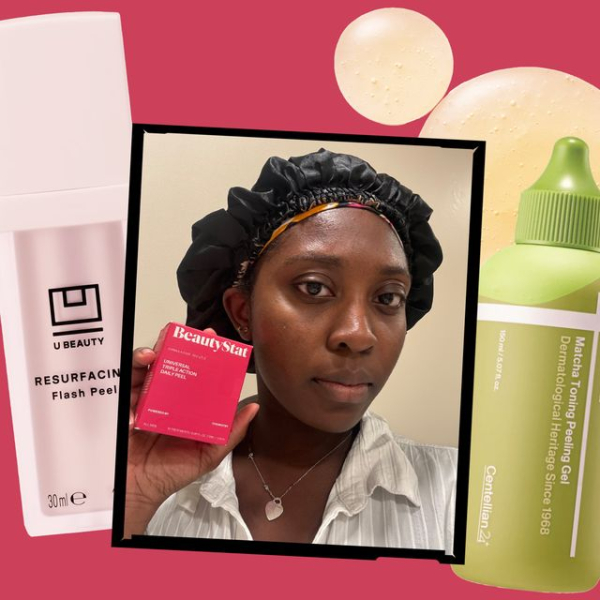
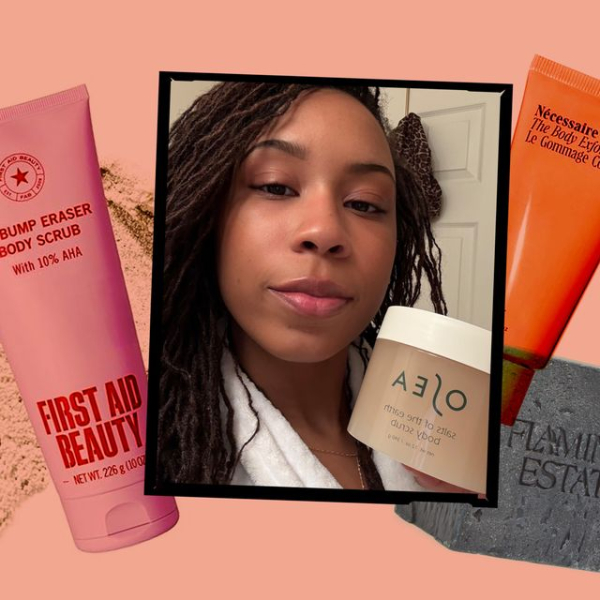
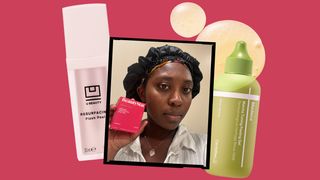
    Image contains Allure associate beauty editor Annie BlayTettey with the BeautyStat Universal Triple Action Daily Peel...Collage: Paula Balondo; Source images: Courtesy of brandsSave StorySave this storySave StorySave this story

    When it comes to the best chemical peels for at-home use, today’s options make it easier than ever to achieve smoother, more radiant skin that rivals the glow of an in-office peel. More powerful than your average face exfoliator, “the benefits [of over-the-counter peels] can include dark spot fading, evening complexion, collagen building, natural tone-enhancing, and exfoliating,” says Mona Gohara, MD, a board-certified dermatologist based in Hamden, Connecticut. That’s why many dermatologists recommend at-home peels between professional treatments like microneedling, lasers, or extractions, because they help extend those results by further exfoliating, brightening, and fading lingering discoloration—while also smoothing skin.

    Our Top Chemical Peels

    • Best Overall: Shani Darden Triple Acid Signature Peel, $125
    • Best for Acne-Prone Skin: U Beauty Resurfacing Flash Peel, $188
    • Best for Sensitive Skin: Centellian 24 Madeca Matcha Peeling Gel, $28
    • Best for Beginners: Dr. Dennis Gross Skincare Alpha Beta Extra Strength Daily Peel Pads, $155 (60-count)

    Frequently Asked QuestionsAccordionItemContainerButtonLargeChevron

    • How do chemical peels work?
    • What ingredients should you look for in a chemical peel?
    • What does aftercare look like post-peel?
    • Meet the experts
    • How we test and review products
    • Our staff and testers

    As for how chemical peels work, it’s somewhat similar to a toner. "Exfoliating enzymes in chemical peels work by gently removing the dead layer of the skin—a.k.a. the stratum corneum—to brighten and smooth the skin," says David Kim, MD, a New York City-based board-certified dermatologist. Even though recent at-home peels are gentler, it’s best to steer clear of so-called “professional-grade” formulas sold online, through third-party sites, or from unverified brands. “I’ve treated patients with burns, scarring, and deep hyperpigmentation after trying those at home, especially in deeper skin tones, which are more prone to discoloration if the peel penetrates too many layers of skin,” says Heather Woolery-Lloyd, MD, a board-certified dermatologist, based in Miami.

    Stick to chemical peels marketed specifically for home use, follow directions to the letter, and always pair with SPF. Ahead, we’ve enlisted the help of derms to round up the best at-home chemical peels that deliver real results.

    Best Overall: Shani Darden Triple Acid Signature Peel
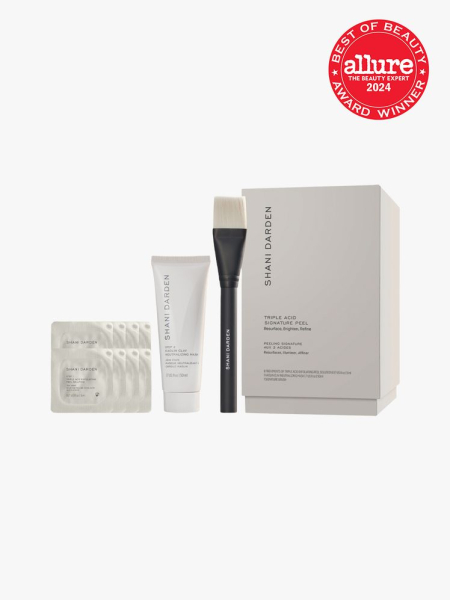
    facial peel system with brush applicator product and additional sachets next to branded box packaging on light gray background with red and white 2024 allure best of beauty sealSave to wishlistSave to wishlist

    Shani Darden

    Triple Acid Signature Peel

    $125

    Amazon

    $125

    Sephora

    $125

    Revolve

    Allure editor in chief Jessica Cruel applying the Shani Darden Triple Acid Signature Peel

    Jessica Cruel

    Why it's worth it: For those already well-versed in at-home treatments, Shani Darden’s Triple Acid Signature Peel is basically a pro facial in a box—and that’s exactly why it earned a 2023 Best of Beauty Award. The triple acid complex (glycolic, lactic, and mandelic acids) teams up with detoxifying kaolin and bentonite clay, plus soothing fruit and veggie extracts, to target fine lines, discoloration, and other visible signs of aging.

    Because this is a powerful peel, it’s crucial to follow the directions exactly. Start by applying the Triple Acid Solution Peel for one minute (or up to two if your skin isn’t sensitive and can handle it). Next, layer the Neutralizing Clay Mask directly over the peel for 10 minutes. While the peel gets to work, the mask steps in to calm any tingling or discomfort.
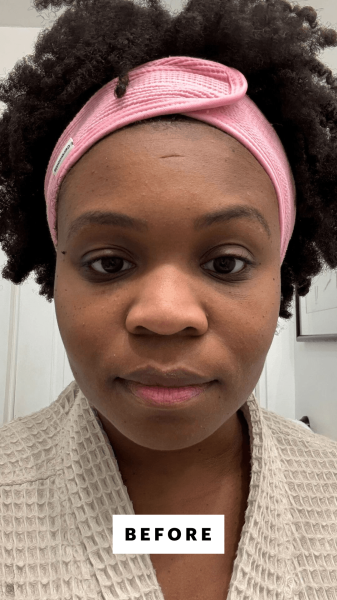
    Cruel before applying the Shani Darden Triple Acid Signature Peel

    Cruel before applying the Shani Darden Triple Acid Signature Peel

    Jessica CruelCruel after applying the Shani Darden Triple Acid Signature Peel
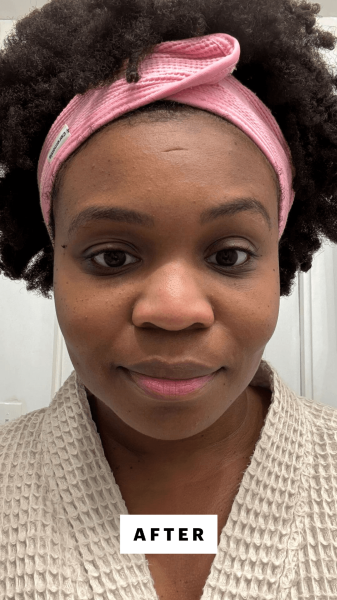
    Cruel after applying the Shani Darden Triple Acid Signature Peel

    Jessica Cruel

    Tester feedback from editor in chief Jessica Cruel

    AccordionItemContainerButtonLargeChevron

    “When I have to be on TV or walk the red carpet, there is only one product I trust to leave my skin glowing, and that's this peel. I have been lucky enough to get the full celeb facial treatment at Shani Darden's LA studio. This two-step exfoliant bottles a little of that magic up for at-home use. I love that it comes with a brush to apply the acid step. Then, you slather on the clay mask, which gives the whole thing a whipped consistency. It tingles a bit, but after I rinse, my skin is visibly glowier.” —Jessica Cruel, editor in chief

    More to know

    AccordionItemContainerButtonLargeChevron

    • Key ingredients: glycolic acid, lactic acid, mandelic acid, kaolin clay, bentonite clay, cucumber extract
    • Who it’s for: people with a normal, oily, acne-prone, or mature skin type
    • Fragrance-free: yes

    Best for Acne-Prone Skin: U Beauty Resurfacing Flash Peel
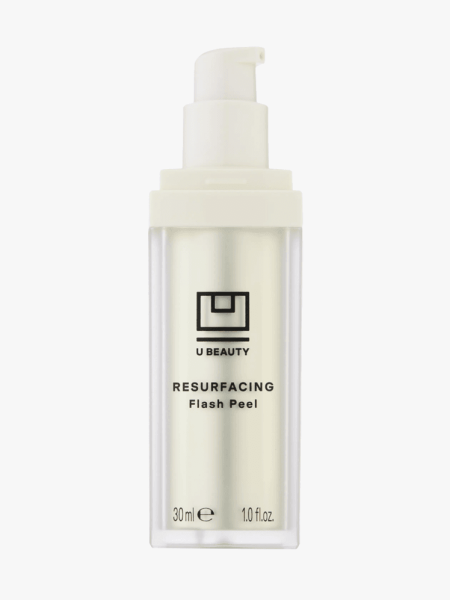
    U Beauty Resurfacing Flash Peel in branded component on a light gray backgroundSave to wishlistSave to wishlist

    U Beauty

    Resurfacing Flash Peel

    $188

    Bluemercury

    Allure contributing commerce editor Deanna Pai applying the U Beauty Resurfacing Flash Peel

    Deanna Pai

    Why it’s worth it: Although the U Beauty Resurfacing Flash Peel is designed to be used in a—well—flash, the payoff goes way beyond a quick glow. “This weekly treatment offers rapid results to exfoliate, brighten, and renew dull-looking skin, but it also tackles uneven tone, clogged pores, and rough texture over time,” says Brendan Camp, MD, a board-certified dermatologist based in New York City. Unlike traditional peels that drench the skin with actives all at once, the brand’s proprietary Siren capsules deliver exfoliating acids directly to damaged skin, bypassing healthy areas for maximum results with minimal irritation. Glycolic acid and fruit-derived AHAs gently buff away dead cells, while hyaluronic acid and polyunsaturated essential fatty acids restore hydration and cushion the barrier. The formula also contains retinyl palmitate—often marketed as “pro-retinol”—one of the gentlest members of the retinoid family. It gradually converts to retinoic acid in the skin to help support cell turnover, smooth the look of fine lines, and encourage a more even-toned complexion, all while being less likely to cause irritation than traditional retinol. You get both instant radiance and healthier, smoother skin the more you use it.
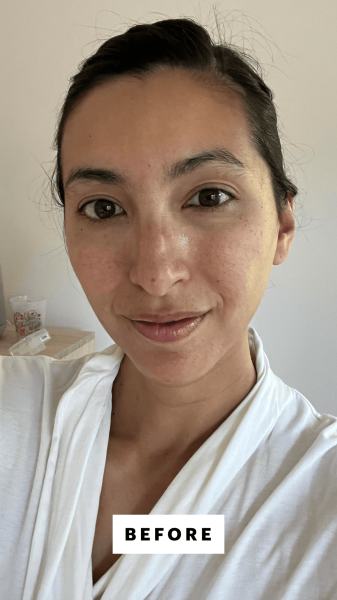
    Pai before applying the U Beauty Resurfacing Flash Peel

    Pai before applying the U Beauty Resurfacing Flash Peel

    Deanna PaiPai after applying the U Beauty Resurfacing Flash Peel
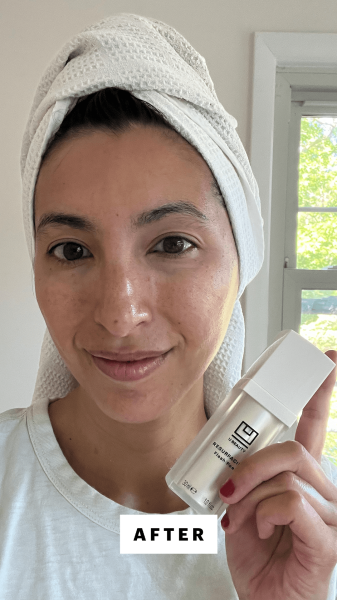
    Pai after applying the U Beauty Resurfacing Flash Peel

    Deanna Pai

    Tester feedback from contributing commerce editor Deanna Pai

    AccordionItemContainerButtonLargeChevron

    “When I’m not dealing with breakouts, I’m fielding the requisite dark spots—and luckily this peel handles both. I love that it’s packaged like a lotion, meaning I can just pump out as much as I need and smooth it on (versus dealing with a brush or spatula), and that it’s lightweight and imperceptible. There’s zero tingling even if I go past the recommended 10 minutes, and my skin was noticeably brighter and smoother after I rinsed it off.” —Deanna Pai, contributing commerce editor

    More to know

    AccordionItemContainerButtonLargeChevron

    • Key ingredients: glycolic acid, aloe vera, betaine, hyaluronic acid, aventramide, retinyl palmitate
    • Who it’s for: all skin types, especially people with dry or dehydrated skin
    • Fragrance-free: yes

    Best for Hyperpigmentation: BeautyStat Universal Triple Action Daily Peel
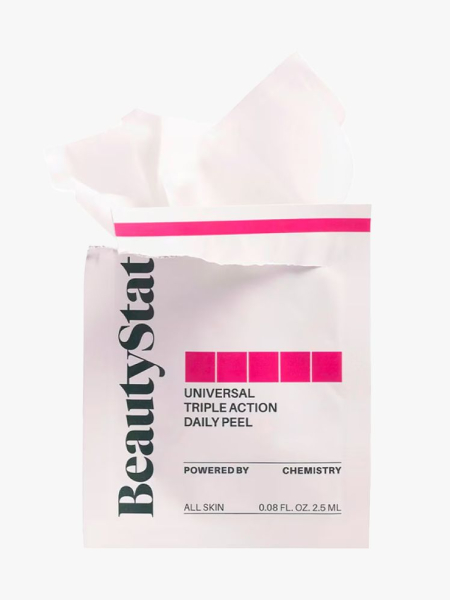
    BeautyStat Universal Triple Action Daily Peel in branded component on a light gray backgroundSave to wishlistSave to wishlist

    BeautyStat

    Universal Triple Action Daily Peel

    $29

    Amazon

    $29

    Dermstore

    $29

    Revolve

    Allure associate beauty editor Annie Blay-Tettey using the BeautyStat Universal Triple Action Daily Peel

    Annie Blay-Tettey

    Why it’s worth it: If dark spots, post-breakout marks, and uneven tone are your main concerns, BeautyStat's Universal Triple Action Daily Peel takes a gentle-but-effective approach to brightening. The formula combines lactic acid, time-released salicylic acid (a slow-release form that minimizes the irritation and sting sometimes associated with traditional salicylic acid treatments), and glucosamine to whisk away dull surface cells and promote a more even-looking complexion. Niacinamide reduces discoloration, while polyglutamic acid—a hydration-boosting humectant similar to hyaluronic acid—locks in moisture and keeps skin comfortable. Green tea extract further soothes and supports the skin barrier, leaving skin looking smoother, brighter, and more uniform in tone and texture.
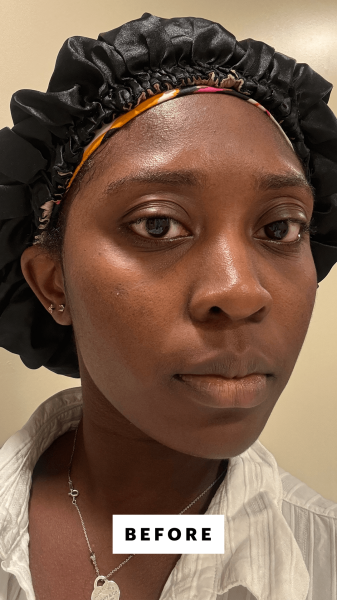
    BlayTettey before using the BeautyStat Universal Triple Action Daily Peel

    Blay-Tettey before using the BeautyStat Universal Triple Action Daily Peel

    Annie Blay-TetteyBlayTettey after using the BeautyStat Universal Triple Action Daily Peel
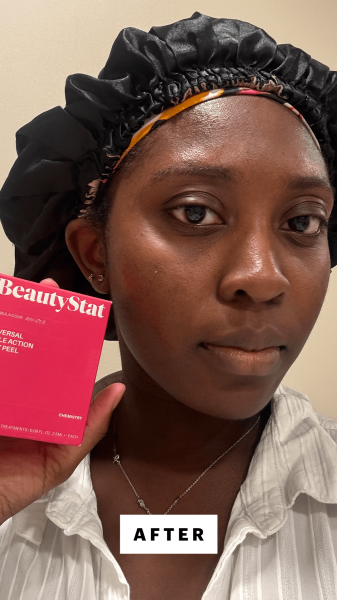
    Blay-Tettey after using the BeautyStat Universal Triple Action Daily Peel

    Annie Blay-Tettey

    Tester feedback from associate beauty editor Annie Blay-Tettey

    AccordionItemContainerButtonLargeChevron

    “I don't get chemical peels often—I prefer not to go into hiding for five days while my skin sheds. So when I want chemical peel-level results, I reach for the BeautyStat Universal Triple Action Daily Peel. While I only use it about twice a week, it leaves my skin looking smoother and brighter each time." —Annie Blay-Tettey, associate beauty editor

    More to know

    AccordionItemContainerButtonLargeChevron

    • Key ingredients: lactic acid, salicylic acid, glucosamine, polyglutamic acid, niacinamide, green tea
    • Who it’s for: people with fine lines or wrinkles, dull skin, or large pores
    • Fragrance-free: yes

    Best for Sensitive Skin: Centellian 24 Madeca Matcha Peeling Gel
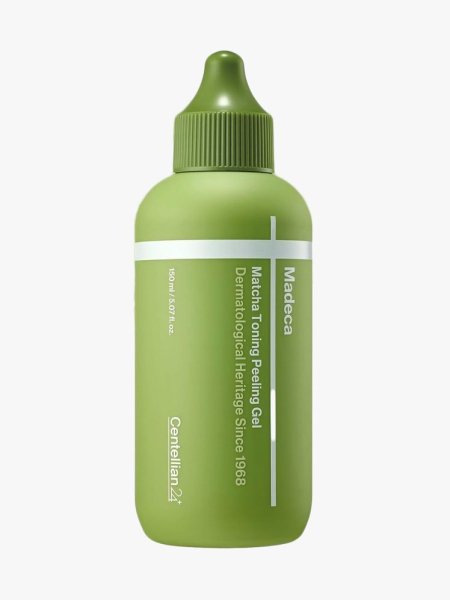
    Centellian 24 Madeca Matcha Peeling Gel in branded component on a light gray backgroundSave to wishlistSave to wishlist

    Centellian 24

    Madeca Matcha Peeling Gel

    $28

    Amazon

    $28

    Nordstrom

    $32

    Olive Young

    Allure contributing commerce writer Christa Joanna Lee applying the Centellian 24 Madeca Matcha Peeling Gel

    Christa Joanna Lee

    Why it’s worth it: File this one under the same oddly satisfying category as peel-off masks and pore strips, a.k.a. products that let you see the results in real time. As you massage Centellian 24’s Madeca Matcha Peeling Gel onto dry skin, tiny clumps begin to form, giving the gratifying impression that dull, dead skin cells are rolling right off your face. But this gommage formula isn't just about the sensory experience. It pairs gentle physical exfoliation with a blend of glycolic, lactic, and capryloyl salicylic acids (also known as lipohydroxy acids, a gentler cousin to SA) to smooth rough texture, clear pores, and brighten dullness. Charcoal powder absorbs excess oil and draws out pore-clogging debris, making it especially appealing for anyone dealing with congestion or blackheads. Meanwhile, matcha extract provides antioxidant protection (and gives the formula its signature green hue), while Centella asiatica and ceramides help keep the skin barrier happy, reducing the likelihood of post-peel redness and irritation.

    The formula does contain fragrance (though it's listed at the very end of the ingredient list, suggesting it's present in a relatively small amount). Our sensitive-skin tester experienced no irritation, but if your skin is especially reactive to certain ingredients, it's worth doing a patch test before applying it to your entire face.
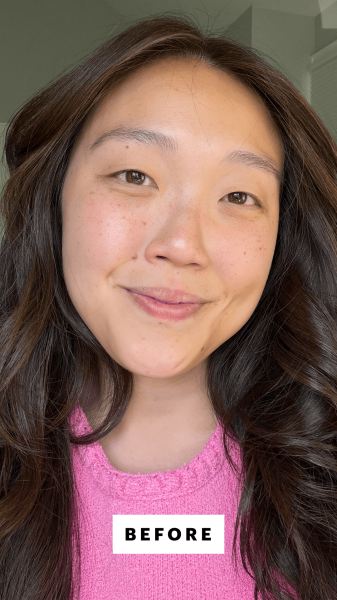
    Lee before applying the Centellian 24 Madeca Matcha Peeling Gel

    Lee before applying the Centellian 24 Madeca Matcha Peeling Gel

    Christa Joanna LeeLee after applying the Centellian 24 Madeca Matcha Peeling Gel
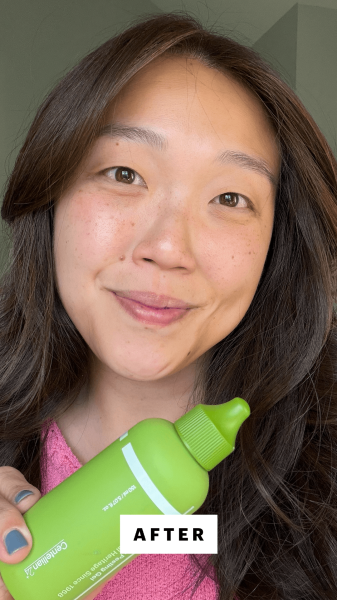
    Lee after applying the Centellian 24 Madeca Matcha Peeling Gel

    Christa Joanna Lee

    Tester feedback from contributing commerce writer Christa Joanna Lee

    AccordionItemContainerButtonLargeChevron

    “I'm kind of addicted to Centellian 24's Madeca Matcha Peeling Gel—and not just because it leaves my skin ridiculously soft. There's something so satisfying about watching all those little rolls of dead skin and buildup appear, kind of like the same guilty pleasure as inspecting a pore strip after you peel it off. Even when my skin doesn't feel particularly dry or flaky, this stuff always seems to find something to exfoliate. As someone with sensitive skin, I've never experienced any irritation, redness, or tightness after using it, which is more than I can say for a lot of exfoliators. Bonus tip: It's fantastic on rough patches like heels and elbows. The only downside is that it can get a little messy when you're using it on your body, so I recommend applying it to dry skin before you turn on the shower.” —Christa Joanna Lee, contributing commerce writer

    More to know

    AccordionItemContainerButtonLargeChevron

    • Key ingredients: glycolic, lactic, and capryloyl salicylic acids, charcoal powder, matcha extract, Centella asiatica
    • Who it’s for: people with sensitive skin
    • Fragrance-free: no

    Best for Early Signs of Aging: Dermalogica Liquid Peelfoliant
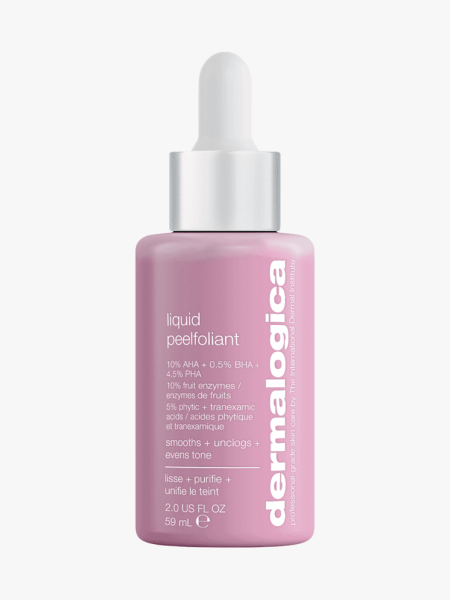
    Image may contain: Bottle, Cosmetics, Perfume, and LotionSave to wishlistSave to wishlist

    Dermalogica

    Liquid Peelfoliant

    $69

    Amazon

    $69

    Ulta Beauty

    $69

    Bluemercury

    Why it’s worth it: Dermalogica’s Liquid Peelfoliant is a professional-strength resurfacing treatment you can work into even the busiest routine. In under three minutes, a 30% multi-acid blend—glycolic, lactic, salicylic, phytic, and tranexamic acids—plus fruit enzymes smooth rough texture and brighten uneven skin tone. “This at-home peel helps with mild acne” just as much as it “reduces the appearance of fine lines and wrinkles,” says Ruth McTighe, MD, a board-certified dermatologist based in Mt. Pleasant, South Carolina. That's because exfoliating acids help accelerate the removal of dull, damaged surface cells that can settle into wrinkles, making skin look rough or crepey. Over time, regular use can help improve skin texture, soften the appearance of fine lines, and create a smoother, more glowy complexion.

    Allure commerce editor Sarah Han applying Dermalogica’s Liquid Peelfoliant

    Sarah HanAllure commerce editor Sarah Han applying Dermalogica's Liquid Peelfoliant
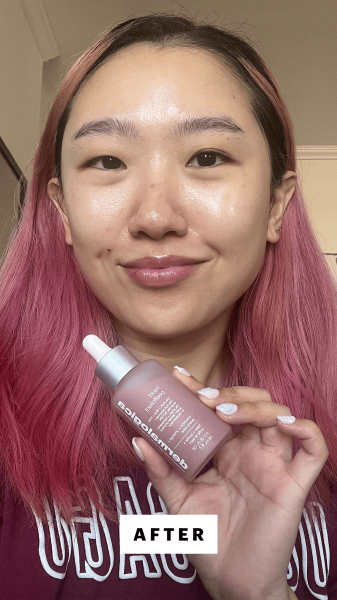
    Allure commerce editor Sarah Han applying Dermalogica’s Liquid Peelfoliant

    Sarah Han

    Tester feedback from commerce editor Sarah Han

    AccordionItemContainerButtonLargeChevron

    “I’m very hesitant when it comes to chemical peels—especially when there’s a 30% acid blend label staring right at me—so you can imagine my surprise when I didn’t feel my face tingle or burn at all as I worked Dermalogica’s Liquid Peelfoliant into my skin. (I used it multiple times to make sure I wasn’t dreaming.) Of course, non-irritating is great and all (and the bare minimum, tbh), but what about the results? I didn’t do this on purpose, but after a busy day out, I may have skipped washing my face…and let’s just say a very thorough double cleanse and this peel seriously helped revive my skin. I looked dewy as heck, and my pores were singing their praises—though, if they could talk, I’m sure they would’ve yelled at me to not go to bed wearing makeup. I’ve been searching for an exfoliating treatment to use consistently (weekly), and by all means, I think this is it!” —Sarah Han, commerce editor

    More to know

    AccordionItemContainerButtonLargeChevron

    • Key ingredients: phytic acid, fruit enzymes, tranexamic acid, glycolic acid, lactic acid, salicylic acid, gluconolactone
    • Who it’s for: people with fine lines or wrinkles, dull skin, or large pores
    • Fragrance-free: yes

    Best for Beginners: Dr. Dennis Gross Skincare Alpha Beta Extra Strength Daily Peel Pads
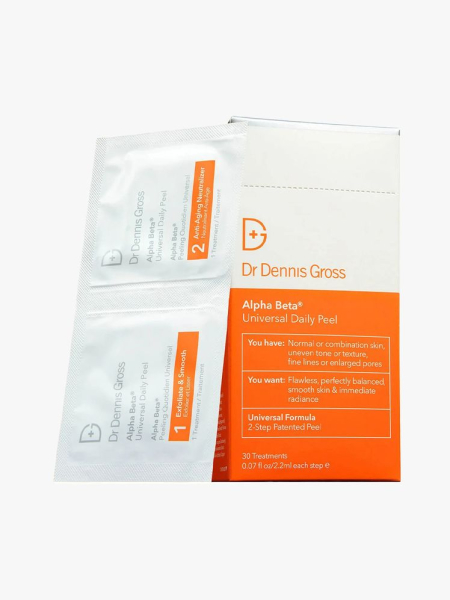
    Dr. Dennis Gross Skincare Alpha Beta Extra Strength Daily Peel Pads white sachets of faical peels and orange and white box on light gray backgroundSave to wishlistSave to wishlist

    Dr. Dennis Gross

    Alpha Beta Extra Strength Daily Peel Pads

    $155

    Amazon (60-Count)

    $155

    Nordstrom (60-Count)

    $155

    Dermstore (60-Count)

    Why it’s worth it: We’ll take our glow to go, please. Ideal for tossing in your carry-on or keeping on your nightstand, Dr. Dennis Gross Alpha Beta Extra Strength Daily Peel Pads make pro-level exfoliation as simple as swipe, wait, repeat. “These come in easy-to-use facial pads with a two-step system that combines AHAs, BHAs, retinol, and antioxidants,” says Dr. McTighe. Let's break it down. Step one is all about exfoliation: Seven acids (including glycolic, lactic, and salicylic) sweep away dead skin cells, refine tone, and smooth lines, while chamomile and green tea help calm and protect. Step two shifts the focus to repair and renewal, layering in retinol to boost elasticity, adenosine to soften wrinkles, and antioxidants like resveratrol and green tea to defend against free radical damage. “It's a tried-and-true product that works especially well for people with oily skin or those prone to breakouts," adds Dr. Woolery-Lloyd.

    Cruel applying the Dr. Dennis Gross Alpha Beta Universal Daily Peel

    Jessica CruelCruel after applying the Dr. Dennis Gross Alpha Beta Universal Daily Peel
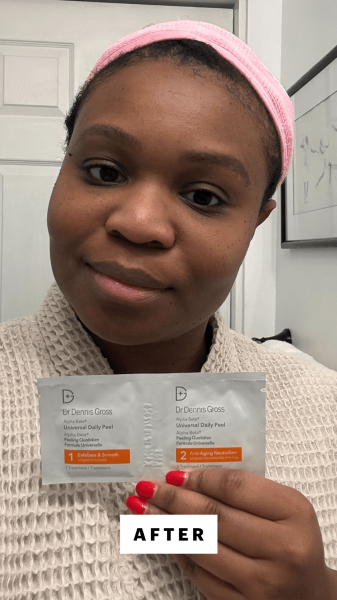
    Cruel after applying the Dr. Dennis Gross Alpha Beta Universal Daily Peel

    Jessica Cruel

    Tester feedback from Cruel

    AccordionItemContainerButtonLargeChevron

    “Whenever someone asks me the best peel for beginners, I always point them to Dr. Dennis Gross. His portfolio of exfoliating pads suits both first-timers and experienced pros, and this Universal Peel sits right in the middle. Step 1 contains the exfoliating AHA and BHA acids. The second step is the neutralizer. The first part gives a slight tingle, and the second step is a true burn that lasts about 30 seconds. The glowy skin results are instant. I love that they come individually wrapped, which means they will never dry out. Plus, they are easy to throw in your toiletry bag for travel.” — Cruel, editor in chief

    Tester feedback from features director Dianna Singh

    AccordionItemContainerButtonLargeChevron

    "What may look like a makeup remover wipe at first glance is actually a pad packed with chemical exfoliators that help brighten instantly and improve discoloration over time. I first discovered these back when I was a beauty assistant (so, longer ago than I'd like to admit), and yet somehow I'm still pleasantly surprised by the next-day glow I get from using one of these at night." —Dianna Singh, features director

    More to know

    AccordionItemContainerButtonLargeChevron

    • Key ingredients: step 1 includes salicylic acid, glycolic acid, lactic acid, and chamomile; step 2 includes retinol, resveratrol, green tea extract, and adenosine
    • Who it’s for: everyone, especially those with fine lines and wrinkles
    • Fragrance-free: no

    Best for Dry Skin: Dr. Melaxin Peel Shot Exfoliating White Rice Ampoule
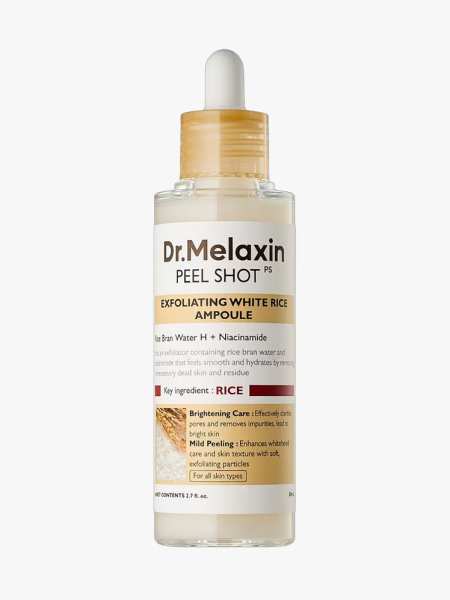
    Dr. Melaxin Peel Shot Exfoliating White Rice Ampoule in branded dropper component on a light gray backgroundSave to wishlistSave to wishlist

    Dr. Melaxin

    Peel Shot Exfoliating White Rice Ampoule

    $19 $18 (5% off)

    Amazon

    $28

    Nordstrom

    $26

    Ulta Beauty

    Why it’s worth it: If you have dry skin, the phrase "chemical peel" probably conjures up visions of tight, flaky, irritated skin—not exactly the glow-up you're after. But that’s what makes Dr. Melaxin's Peel Shot White Rice Exfoliating Ampoule different. "It's a gentle alternative to harsh chemical peels to exfoliate and brighten skin," says Sarah Chung Park, founder of Landing International and creator of K-Beauty World based in Los Angeles. Citric acid, gluconolactone (a PHA), and salicylic acid help skin shed dead skin cells and smooth rough texture, while rice water extract and niacinamide work to boost radiance and promote a more even-looking complexion. Just as importantly for dry skin types, the formula is infused with Pentavitin (the trade name for saccharide isomerate), a plant-derived carbohydrate complex that binds moisture to the skin for long-lasting comfort. The formula combines rice water and niacinamide to gently lift away dead skin cells (similar to the exfoliating action of the Centellian 24 Madeca Matcha Peeling Gel on this list) while helping skin feel soft, smooth, and hydrated. “You can even work your way up to daily use,” says Park.

    More to know

    AccordionItemContainerButtonLargeChevron

    • Key ingredients: rice water extract, niacinamide, citric acid, gluconolactone, salicylic acid
    • Who it’s for: everyone, especially those with sensitive skin
    • Fragrance-free: yes

    Best for Mature Skin: Kate Somerville KateCeuticals Resurfacing Overnight Peel
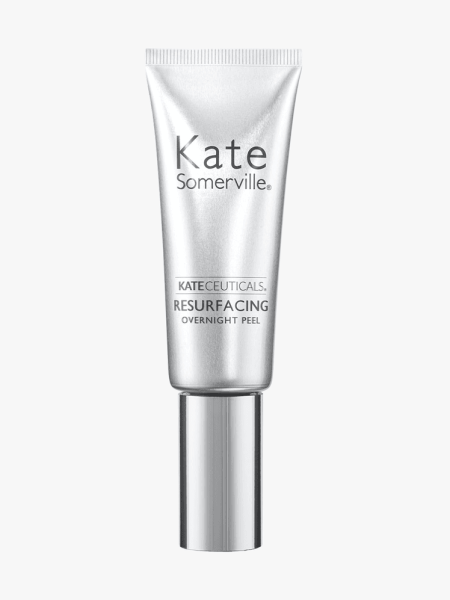
    Image may contain: Bottle, and AftershaveSave to wishlistSave to wishlist

    Kate Somerville

    Kateceuticals Resurfacing Overnight Peel

    $109

    Amazon

    $109

    Nordstrom

    $109

    Dermstore

    Why it's worth it: Some of the best glows happen when your skin-care products get extra time to sink in. Designed to work overnight, “a unique feature of Kate Somerville’s KateCeuticals Resurfacing Overnight Peel is the use of ceramide-encapsulated retinol,” says Dr. Camp. This “improves tolerability and reduces irritation” by cushioning retinol’s delivery, making the wrinkle-reducing ingredient more gentle, says Dr. Camp. The formula also highlights glycolic acid, which helps dissolve dead skin cells that can leave skin looking dull or rough. Together, they smooth texture, boost radiance, soften the appearance of fine lines, and promote a more even-looking complexion while you sleep. “Just be sure to skip other retinoids that evening to avoid overdoing it,” says Dr. Camp.

    More to know

    AccordionItemContainerButtonLargeChevron

    • Key ingredients: niacinamide, glycolic acid, retinol, ceramides
    • Who it’s for: people with dull or dry skin
    • Fragrance-free: no

    Best for Uneven Texture: Elemis Dynamic Resurfacing Peel & Reset
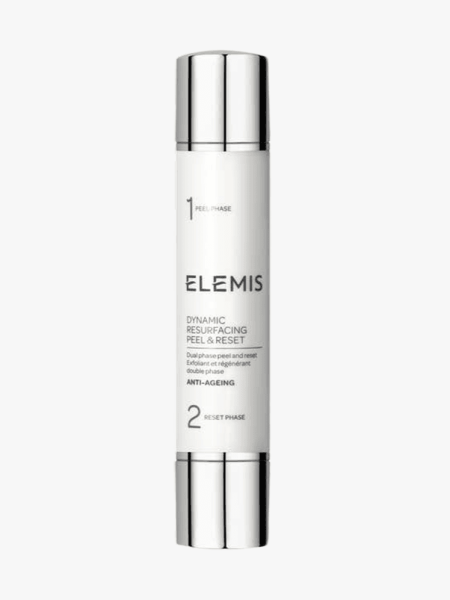
    Image may contain: Bottle, Shaker, and CosmeticsSave to wishlistSave to wishlist

    Elemis

    Dynamic Resurfacing Peel & Reset

    $122

    Nordstrom

    Why it’s worth it: The Elemis Dynamic Resurfacing Peel & Reset comes in a clever double-ended package—one side to peel, the other to reset—making glow-inducing results surprisingly easy at home. Formulated for twice-weekly use, it tackles discoloration, visible pores, and age spots all in one routine. Step one resurfaces with a patented trio of enzymes (papain, protease, and subtilisin) plus phytic, ellagic, and mandelic acids to boost luminosity and refine skin’s texture. Thanks to mandelic acid’s larger molecular size, it penetrates more slowly, making it gentler and less irritating while still boosting cell turnover. “The second step soothes post-peel skin with deep hydration and includes birch juice and Lactococcus ferment lysate to rebalance skin,” says Dr. Camp. You’re basically getting two treatments in one.

    More to know

    AccordionItemContainerButtonLargeChevron

    • Key ingredients: phase 1 includes papain, protease, subtilisin, phytic acid, ellagic acid, and mandelic acid; phase 2 includes glycerin, birch juice, Lactococcus ferment lysate
    • Who it’s for: people with dullness, uneven texture, or clogged pores
    • Fragrance-free: no

    Frequently Asked Questions

    How do chemical peels work?

    "Chemical face peels, a.k.a. exfoliating acid masks, work by penetrating the outer layers of the skin, breaking down the bonds between dead skin cells and stimulating the production of collagen and elastin," explains Shereene Idriss, MD, a board-certified dermatologist based in New York City. Most at-home treatments are not deep peels, but rather superficial, making them appropriate for everyday folks to use without the assistance of a dermatologist or esthetician.

    "At-home chemical peels typically rely on AHAs (alpha hydroxy acids) like glycolic and lactic acid or a BHA (beta hydroxy acid) like salicylic acid to exfoliate the skin," says Mamina Turegano, MD, a board-certified dermatologist based in New Orleans. "More gentle peels will include fruit enzymes." She advises against the use of phenol peels at home, as they're very intense and should only be used for in-office treatments.

    What ingredients should you look for in a chemical peel?

    Not all exfoliating acids are created equal. After all, who among us has the same skin concerns? "When looking for an exfoliating acid product, it’s important to find the right one(s) for your skin type and needs," cautions Dr. Idriss. Here are some of our dermatologists' recommendations:

    • Glycolic Acid: Helps stimulate collagen and reduce fine lines and wrinkles, and works well for dry skin
    • Salicylic Acid: Unclogs your pores and regulates sebum production, making it ideal for anyone with oily, acne-prone skin
    • Fruit Enzymes: Great for beginners and those with sensitive skin, as they're more gentle exfoliants
    • Lactic Acid: Helps with brightening and treating keratosis pilaris
    • Mandelic Acid: Ideal for deeper skin tones and those with sensitivity since it has a larger molecular size compared to other AHAs, and penetrates the skin more slowly and uniformly
    • Polyhydroxy Acids (PHAs): Gluconolactone, lactobionic acid, and maltobionic acid are great for super sensitive skin as they are the most gentle group with the largest molecular size, per Dr. Idriss.

    What does aftercare look like post-peel?

    For a week leading up to a chemical peel, Dr. Turegano finds it helpful to use a gentle exfoliant so that your skin can better absorb the ingredients during the chemical peel. "I would also use ingredients to improve your skin's health, like vitamin C serums and peptide serums," she says.

    Dr. Kim notes that after a peel, protecting your skin with a broad-spectrum SPF 30 (or higher) is essential."It's important to use sunscreen every day when you're going to use acids regularly, so your skin doesn't feel more sensitive to the sun," he says. "It's best to avoid the sun as much as possible the next day, and you should probably skip a peel before heading to the beach or on a sunny vacation." And while they're all the rage right now, he says you don't necessarily need specific barrier cream after your peel and that a regular moisturizer suffices. Dr. Turegano recommends a thicker moisturizer if you have one on hand, and also encourages the use of peptide or growth factor serums, but it's important to check your peel's box or label to make sure these serums won't interact with the peel you used.
    All of our experts generally advise avoiding retinol, AHAs, BHAs, and physical exfoliants for a few days following the use of a chemical peel to avoid excess irritation. "This timeline can vary from person to person and is also dependent on the type of peel," notes Dr. Turegano.
    Meet the experts
    • Brendan Camp, MD, a board-certified dermatologist at MDCS Dermatology: Medical Dermatology & Cosmetic Surgery, based in New York City
    • Mona Gohara, MD, a board-certified dermatologist based in Hamden, Connecticut
    • Shereene Idriss, MD, a board-certified dermatologist and founder of Dr. Idriss Skincare, based in New York City
    • David Kim, MD, a board-certified dermatologist at New York Dermatology Group, based in New York City
    • Sarah Chung Park, founder and CEO of beauty distributor Landing International and creator of K-Beauty World at Ulta Beauty based in Los Angeles
    • Ruth McTighe, MD, a board-certified dermatologist of Waccamaw Dermatology based in Mt. Pleasant, South Carolina
    • Mamina Turegano, MD, a board-certified dermatologist based in New Orleans
    • Heather Woolery-Lloyd, MD, a board-certified dermatologist based in Miami

    How we test and review products

    When Allure tests a product, our editors look at it from every angle in an effort to best serve you. We review ingredients, scrutinize brand claims, and, when necessary, examine peer-reviewed scientific and medical studies. In addition to testing each and every product that's included in each and every review, we rely on experts who shape their fields, including dermatology, cosmetic chemistry, and medicine, to help us vet the ingredients and formulas.

    For our list of the best chemical peels, we considered each product's performance across five primary categories: product ingredients and efficacy, packaging, fragrance, texture, and product wear. Every product was determined to have excelled in each category by our editorial team, which is composed of in-house writers and editors as well as contributors—along with special consideration from board-certified dermatologists. To learn more information on our reporting and testing processes, read our complete reviews process and methodology page.

    Our staff and testers

    A beauty product is a personal purchase. You might be searching for a face cream to address persistent dryness or a new nail product to add to your Sunday self-care routine; you may simply be browsing around for the latest launches to hit the hair market. No matter what you seek or your individual needs and concerns, Allure wants to ensure that you love anything we recommend in our stories. We believe that having a diverse team of writers and editors—in addition to the wide range of outside testers and industry experts we regularly call upon—is essential to reaching that goal.

    After all, can we really say a skin-care product is the "best" for people over 50 if the only testers we've solicited opinions from folks who have yet to hit 30? Can we honestly deem a high-end diffuser worthy of your hard-earned cash if it’s never been tested on curls? We’re proud that our staff spans a wide range of ages, skin tones, hair textures, genders, and backgrounds, which means that we are able to fairly assess any beauty product that comes into the beauty closet.